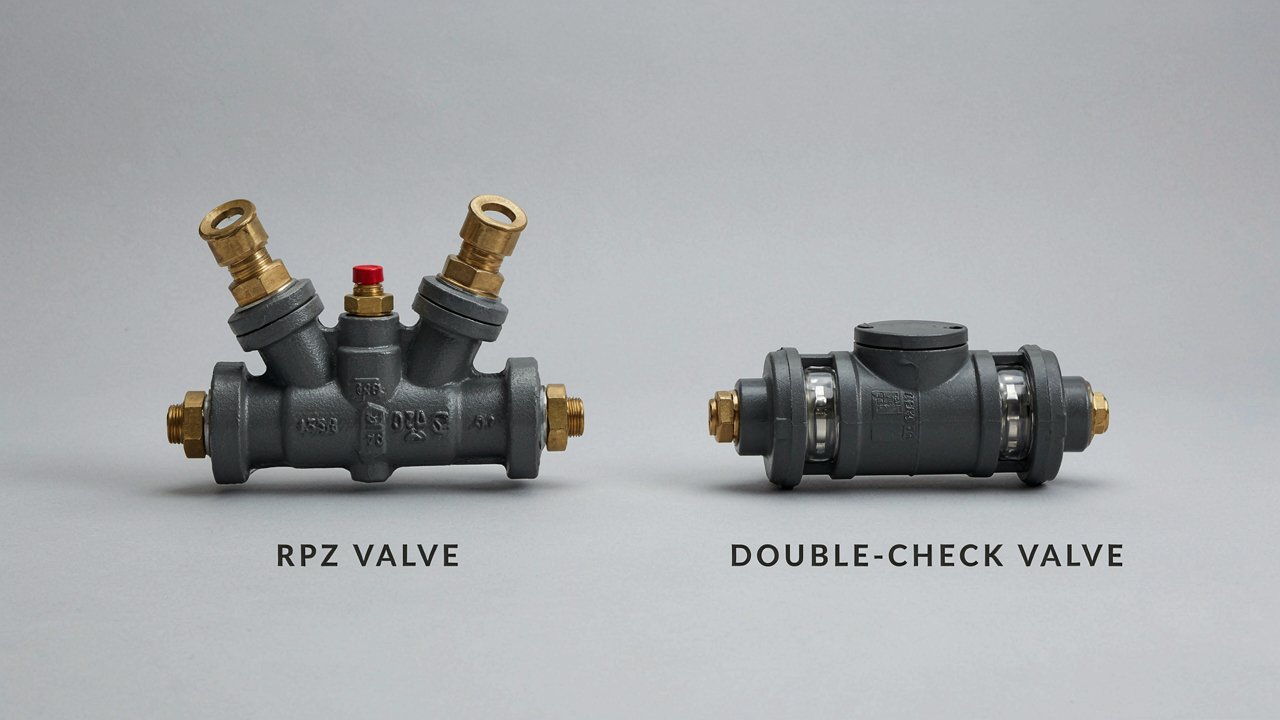
The property owner gets his mail and finds that there is a notice from Sydney Water which indicates the need for backflow testing. The notice could be referring to an RPZ or double-check valve. These two work by ensuring that the contaminated water does not flow backwards into the primary source of drinking water. They serve almost the same function and thus raise questions on why they are different.
The short answer: The RPZ valve is usually associated with high-hazard applications, whereas the testable double-check valve assembly is usually associated with medium-hazard applications. However, the proper device will be determined completely by the hazard classification of your building according to Sydney Water and AS/NZS 3500. 1.
You cannot just select either an RPZ or a DCV depending on their costs or appearance. The type of plumbing activity at your place determines the degree of hazard, and this will determine the device to be used.
Below is a detailed explanation of how an RPZ works as compared to the testable double-check valve, the hazard rating application for commercial buildings in Sydney, and what you should do when testing time comes around.
RPZ Valve vs Double Check Valve at a Glance
The below table outlines the main distinctions between the two major backflow prevention test devices employed in commercial establishments.
| Feature | RPZ Valve | Double Check Valve (DCV) |
| Full Name | Reduced Pressure Zone Device (RPZD) | Testable Double Check Valve Assembly |
| Typical Hazard Application | High hazard | Medium hazard |
| Protection | Prevents back-siphonage and back-pressure against highly toxic contaminants | Prevents back-siphonage and back-pressure against moderately toxic contaminants |
| Relief Valve | Yes. Dumps contaminated water if the internal valves fail. | No. Contains reverse flow but does not discharge water. |
| Testable | Yes. Requires annual testing. | Yes. Requires annual testing. |
| Water Discharge | Discharges water safely away from the drinking supply during a fault. | Does not discharge water. |
| Installation Considerations | Must be installed above ground with adequate drainage. Cannot be installed in a pit. | Can be installed vertically or horizontally, and in pits (subject to site conditions). |
| Typical Sydney Applications | Car washes, hospitals, chemical plants, industrial sites, commercial kitchens. | Standard commercial buildings, specific strata setups, retail stores without hazardous processes. |
| Annual Testing | Mandatory in NSW. | Mandatory in NSW. |
For a more detailed guide to choosing the right backflow device for your property, see our guide to RPZ, DCV or PVB: Which Backflow Device Do You Actually Need?.
What Is an RPZ Valve?
An RPZ (Reduced Pressure Zone) backflow preventer is considered the most advanced testable mechanical backflow prevention device that exists.
This device is made up of two independent check valves with a relief valve that is placed between them. What makes this device work is the relief valve. In case the check valves inside fail or the pressure drops suddenly (thus causing back siphonage danger), then the relief valve will open, letting the water flow out.
Through the discharge of water, the RPZ is ensured to prevent highly polluted, dangerous, or hazardous liquids from ever passing through the air gap and mixing with the potable water system. The fact that water is discharged by the RPZ means that it should have sufficient drainage and not be placed underground.
What Is a Double Check Valve?
The DCV assembly with a testable dual-check valve has two check valves, which are spring-loaded, placed in series. Also, test connections are used to ensure that the system is working properly by a certified plumber.
The flow of water goes through the valves in one direction. When there is any drop in pressure, or there is a reverse pressure, then the valves close due to the pressure of the springs and trap the water.
The most significant distinction between the DCV and the RPZ valves is that the double check valve doesn’t feature a relief valve. The water is trapped in the valve itself. The valve doesn’t release the water into the ground. Thus, DCVs work very effectively in the case of medium-hazard installations when the contamination is a nuisance rather than a life-threatening risk.
Don’t confuse the testable double-check valve installation with the non-testable dual-check valve that is often installed at residential water metres. If Sydney Water demands an annual test for your medium-hazard site, you should install a testable DCV.
Why Does Hazard Rating Matter in Sydney?
The kind of backflow preventer that your property will need will depend on its risk level. According to AS/NZS 3500.1 and Sydney Water guidelines, cross-connections are risk-assessed based on three different risk levels.
- Low Hazard
This is a connection where any backflow situation will result in inconvenience and affect the taste or colour of water, without posing a risk to health. A typical non-testable double check valve would be appropriate for this scenario.
- Medium Hazard
A cross connection where there is a risk of contamination of the system through material that is slightly harmful. This would include water in commercial swimming pools, normal irrigation systems, or normal commercial buildings. A double-check valve assembly is usually needed for moderate hazard control.
- High Hazard
A cross connection where there is a risk of contamination of the system through material that is slightly harmful. This would include water in commercial swimming pools, normal irrigation systems, or normal commercial buildings. A double-check valve assembly is usually needed for moderate hazard control.
Rule number one when it comes to backflow compliance: Your chosen device is dictated by your risk assessment. It does not matter that you like a different level of device, just because it would fit nicely in your garden bed.
Can You Use a Double Check Valve Instead of an RPZ?
Should the property be considered a high hazard, it should not be possible to substitute a double check valve for an RPZ device.
Installation of a double check valve where an RPZ device should be installed is in violation of plumbing regulations and renders the community’s drinking water at risk of serious contamination since it does not have a relief valve for venting highly toxic contaminants.
A plumber may be approached by the property owner in replacing a bad RPZ with a DCV simply because it is less expensive and easier to install since it doesn’t need any drain. But this does not mean that you will be compliant. You are bound to fail in your compliance audit once you downgrade your backflow prevention device. There is still the Sydney Water that can stop your water connection.
In case the hazard rating of your property has been altered, for instance, the industrial chemical plant has been turned into a normal showroom, you have to get the hazard rating reassessed by the certified backflow plumber.
RPZ vs DCV for Common Sydney Properties
The risk rating is for the real activity, process, or relationship within the site, but not the general classification of the building. Nevertheless, there are common hazards that the usual buildings in Sydney belong to.
- Restaurants and Cafés
Many hospitality establishments in areas such as Surry Hills and the Sydney CBD would need an RPZ valve. Despite the fact that coffee machines may appear to pose little danger, commercial kitchens typically connect the mains water straight to chemical dispensers for their dishwashers and other cleaning areas.
- Industrial and Mechanical Workshops
Workshops in suburbs such as Blacktown and Penrith in Western Sydney often have coolants, heavy degreasers, and industrial chemicals. These exposures would fall under the high hazard category, necessitating an RPZ.
- Medical and Healthcare Facilities
Dental surgeries, healthcare precinct hospitals such as Macquarie Park, and medical facilities produce biohazardous wastes and medical chemicals. Such sites qualify as high-risk premises that require RPZ.
- Standard Commercial and Strata Buildings
For any typical multi-level office building or strata development in Chatswood or Ryde that does not have any specific hazardous operations, the usual requirement is a double-check testable backflow preventer at the boundary level. This applies to medium hazard containment. But some specific areas within the building that qualify as a high hazard zone will need RPZs individually.
Installation Differences Between RPZ and DCV
The physical differences between the two devices dictate where they can be installed on your property.
RPZ Installation Requirements
Since the RPZ discharges water in case of failure, there should be enough drainage capacity. An RPZ needs to be placed above the surface at all times; it should not be placed inside a pit. It also cannot be placed in any area where it can be flooded because the floodwater would be drawn back into the potable water system through the relief port.
DCV Installation Requirements
Double-check testable backflow prevention devices will not release any water. There are more options for plumbers with double-check testable devices. A DCV may be installed above ground; however, it may also be installed in a buried box at the property line as long as there is room to connect their testing equipment.
Testing and Sydney Water Compliance
Testable double-check valves and reduced-pressure-zone valves are physical devices that consist of rubber gaskets, springs, and other moveable parts. Eventually, these moveable parts break down and deteriorate.
This is why Sydney Water requires that testable backflow prevention devices be tested on an annual basis.
Testing entails the fitting of specific pressure gauges to the test ports of the device. The plumber tests the pressure differences to ensure that the internal check valves are holding pressure in the opposite direction and that, for the RPZ device, the relief valve pops open at the correct pressure point.
The testing has to be carried out by a licensed plumber who is backflow accredited. Backflow Testing Sydney offers the yearly testing of your backflow preventer and will submit the compliance reports to the Sydney Water Portal on your behalf.
What Happens If Your RPZ or DCV Fails?
The failure of the test shows that the backflow prevention device is not working efficiently anymore. However, this doesn’t mean that you have to purchase a brand new device.
Common causes of failure include:
- Debris caught in the check valves
- Worn or split rubber seals
- Fatigue in the internal springs
- Mineral buildup from the water supply
In many cases, the accredited tester will be able to take apart the valve, clean its inner parts, replace its rubber gaskets by means of a repair kit provided by the manufacturer, and test the valve on the spot. In case the valve casing is broken, severely rusted, or otherwise irreparably damaged, then the whole assembly has to be replaced by a new one.
How Much Does RPZ or DCV Backflow Testing Cost in Sydney?
Testing costs vary based on the specific logistics of your property. Factors influencing the final cost include:
- Number of devices on site: The testing of several valves in one location usually leads to lower costs.
- Accessibility: A valve installed close to the ground in an open utility room is easier to test than an RPZ, which is mounted high up on the wall and requires elevation.
- Costs: The testing costs are usually fixed; however, if the valve needs repairs, one needs to budget for the price of the repair kit as well as the labour costs.
- Location: In Greater Sydney, time spent travelling between locations may affect the cost of service.
Backflow Testing Sydney offers you fair and upfront pricing prior to doing any work. We suggest that you include your yearly test of your device during one visit only.
What Should You Do If You Have Received a Sydney Water Backflow Notice?
If you have received a letter from Sydney Water requiring action, follow this simple process:
- Read the notice carefully: Decide whether the notice is about annual testing, a notification of failure of the device, or installing a new device.
- Identify your device: You need to check your current plumbing system to find out whether you have an RPZ or DCV.
- Never underestimate the deadline: The company has strict deadlines of compliance, and failure to comply means being slapped with fines or having the water supply cut off.
- Find an accredited tester: Get an accredited backflow plumber to visit your location and conduct the testing and whatever repairs are needed.
- Lodge the document: Make sure the plumber lodges the test results to Sydney Water. Make sure you have copies of the test results as well.
RPZ or DCV: Which One Do You Need?
The criteria is simple. If the plumbing connections of your property are assessed to be at high risk, then usually you need to have an RPZ installed. On the other hand, if it is found to be medium risk, then you need to have a double check valve.
In case you have received a Sydney Water notification, require your backflow test to be done for the year, or do not know what backflow preventer you have installed at your commercial property, contact us today at Backflow Testing Sydney. We can undertake testing and maintenance of DCV and RPZ systems in Greater Sydney.
FAQs
What is the difference between an RPZ valve and a double check valve?
The RPZ valve has a relief valve that releases contaminated water in case of failure of the valve. This is ideal for hazardous scenarios. The testable double check valve prevents reverse flow but has no discharge of water; thus, it is ideal for moderately hazardous scenarios.
Is an RPZ valve for high hazard?
Yes. RPZ devices offer the maximum level of mechanical backflow prevention. They are mandatory in high-hazard connections, where backflow may lead to contamination of the potable water system with dangerous and even lethal pollutants.
Can a double-check valve be used instead of an RPZ?
No. In case a building or a particular water connection has been identified as having a high hazard, it should have an RPZ installed. This is because a double check valve does not have a relief valve.
How often does an RPZ valve need to be tested in Sydney?
Any backflow prevention device that can be tested, which includes RPZ and testable double-check valves, needs to be tested yearly by a licensed backflow plumber under Sydney Water and NSW plumbing standards.
Does Sydney Water require annual backflow testing?
Yes. Sydney Water requires that each year, all testable containment devices be tested. It is the duty of the property owner to get an accredited plumber to test the device and file the report using the Sydney Water portal.
What happens if a backflow device fails its test?
It is important that a broken appliance be fixed or replaced right away. Most times, an approved plumber can take apart the appliance, clean out any debris, and replace old rubber seals using a repair kit all within the same day.
What happens if my property’s hazard rating is unknown?
Do not guess your hazard level. You have to hire a professional backflow plumber or hydraulic engineer who will analyse your property activities and water connections in order to establish an appropriate hazard level and backflow prevention device.