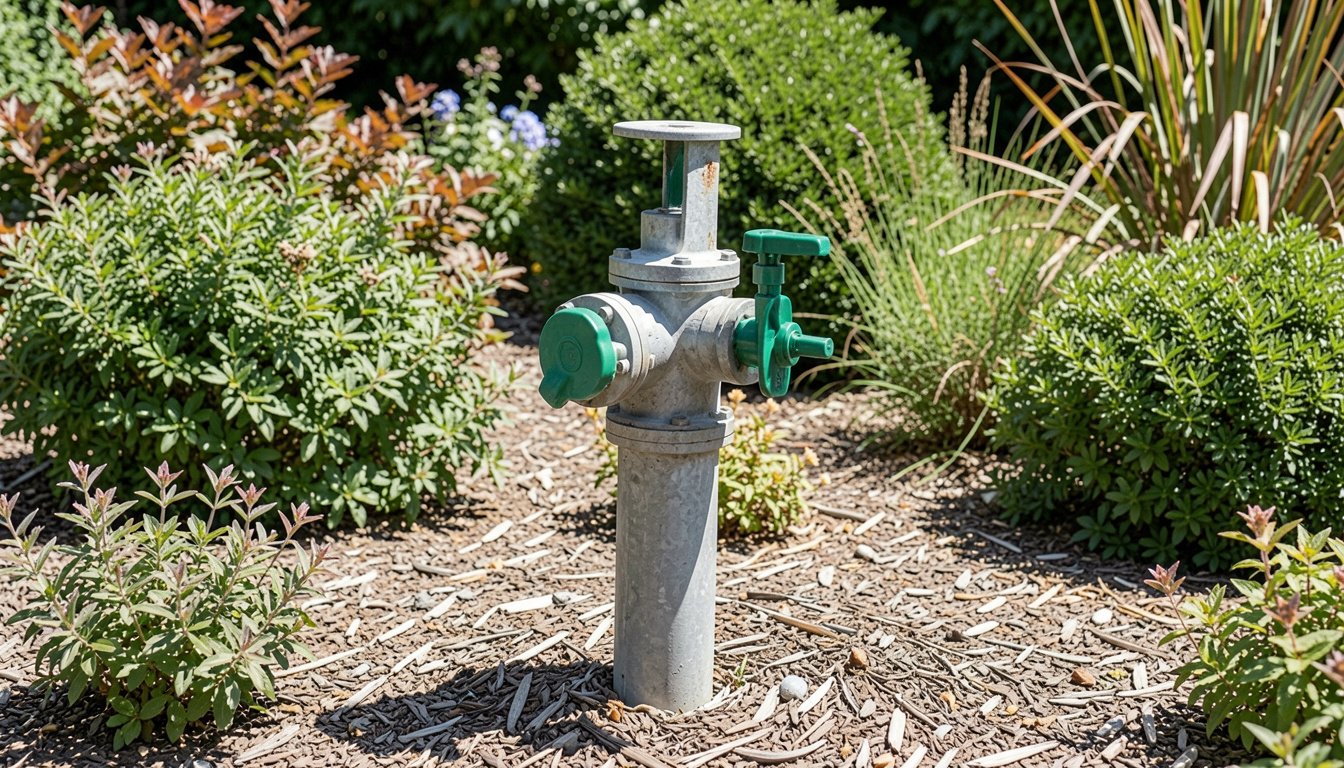
Your choice of backflow device will be based wholly on the hazard level of your property as per the Australian standards. High hazard properties (chemical plants, certain restaurants, etc.) will require an RPZ Valve while medium hazard properties (standard commercial strata, for example) will require a DCV Valve. Pressure Vacuum Breakers should only be used in irrigation systems.
Have you recently gotten a backflow notice from Sydney Water? Perhaps you are developing a commercial site. It might seem like you are trying to interpret all that plumbing lingo. You are aware that you will need a valve to prevent your water supply from being compromised, but you don’t want to end up with the wrong one.
We at Backflow Testing Sydney install, inspect and repair numerous of these devices throughout Sydney on a yearly basis. From skyscrapers located in Sydney Central Business District to industrial sites in Western Sydney suburbs, this article explains what these devices are, what their differences are and which device is mandatory for your site.
What Is a Backflow Prevention Device?
The backflow prevention system is a special mechanical one-way valve fitted on the water pipes of your property. This valve prevents any form of dirty water, chemicals, or other substances from flowing backwards into the safe drinking water. The backflow takes place due to back-pressure or back-siphonage.
Understanding Sydney Water’s Hazard Ratings
As per PCA (Plumbing Code of Australia) and AS/NZS 3500.1, each commercial installation is rated with a hazard risk rating. The hazard rating determines which device must be installed.
- High Hazard: Connections wherein the contaminated water may lead to death or sickness. (e.g., hospitals, chemical factories, car washes and certain places for food preparation).
- Medium Hazard: Connections wherein the water can affect people’s health but will not cause death. (e.g., normal commercial buildings, apartments, retail stores).
- Low Hazard: Connections wherein the water will only cause disturbance in taste or colour but is not harmful. (e.g., common houses).
RPZ vs DCV vs PVB: The Complete Comparison
Knowing the different mechanics of these three typical backflow preventers will allow you to recognise why certain properties need more expensive measures.
| Feature | RPZ (Reduced Pressure Zone) | DCV (Double Check Valve) | PVB (Pressure Vacuum Breaker) |
| Hazard Rating | High Hazard | Medium Hazard | High Hazard (Siphonage Only) |
| Protection Type | Back-pressure & Back-siphonage | Back-pressure & Back-siphonage | Back-siphonage only |
| Discharges Water? | Yes (has a relief valve) | No | Yes (spills air/water) |
| Annual Testing? | Yes (Mandatory) | Yes (Mandatory) | Yes (Mandatory) |
| Typical Use Case | Medical, industrial, hospitality | Strata, retail, basic commercial | Large irrigation systems |
The RPZ Valve (Reduced Pressure Zone Device)
An RPZ valve is known as the best backflow prevention device. It has two check valves, which are separated by a reduced-pressure chamber with an installed relief valve.
How does it work? In case of malfunction of both check valves, or in case back pressure becomes too high, the relief valve activates and discharges the contaminated water to the ground. It is a safety feature that makes it the only safe option of boundary device for high-hazard facilities.
Note about installation: Being designed for dumping water, RPZ should be installed on the surface, with proper drainage. It cannot be installed in any pits where flooding may occur.
The DCV (Double Check Valve)
A double-check valve that can be tested is made up of two check valves that use springs.
How it works: In the event of the backflow of water, the valve closes owing to pressure from the springs. But while the RPZ valve has a relief valve, the DCV valve lacks that feature. In the event of the valves failing, no indication will show up.
Installation note: Since it doesn’t release any water, it can be installed in a pit underground, which makes it a common choice around property boundaries in the Inner West and Sutherland Shire areas.
The PVB (Pressure Vacuum Breaker)
PVB features only one check valve and one air inlet valve.
How it works: This device is especially developed to prevent back-siphonage. Should there be a reduction in mains pressure, the air inlet opens up to create a break in the vacuum; thus, contaminated water will not be siphoned back to the water lines.
Installation note: PVB does not provide a prevention of back-pressure. Consequently, Sydney Water almost never accepts a PVB as a boundary containment device. It is mostly utilised for irrigation purposes or the protection of particular zones within an establishment.
Can I Use a Double Check Valve Instead of an RPZ?
This question is posed every day. Our immediate response is “No, provided that your property is classified as high hazard.”
Yes, while a DCV is less expensive to purchase and easy to install, it does not provide the fail-safe mechanism necessary for high-hazard applications. Should a licensed plumber specialising in backflow determine that your property is high hazard (e.g., operating a restaurant with specific chemical dispensers or a medical clinic in Parramatta), then the installation of the DCV becomes a direct violation of the AS/NZS 3500.1. You will be obliged to replace the DCV with an RPZ after Sydney Water denies your compliance certificate.
What Does Sydney Water Require for Compliance?
Businesses in Sydney that are connected to the municipal water supply system are under stringent legal duties with regard to cross-connection and backflow protection.
- WaterMark Certification: The installed device must conform to AS/NZS 2845 standards and possess WaterMark certification.
- Testing Every Year: All testable devices (RPZ, DCV, and PVB) must undergo testing annually by an accredited backflow plumber.
- Reporting Requirements: Results from successful tests must be reported to Sydney Water within a specified period (typically between 2 and 4 days).
The whole process will be taken care of by Backflow Testing Sydney. Our services include RPZ testing, which is accredited by Sydney Water, and filing the report within 24 hours after conducting the test. In case you ignore the notice of compliance, Sydney Water is legally entitled to penalise, interrupt, or discontinue your water supply completely.
Installation, Maintenance, and Costs
How Much Does Backflow Testing Cost?
Backflow test rates of industry averages in NSW can be anything between $200 and $400 per fitting, and many companies charge steep call-out fees.
At Backflow Testing Sydney, we believe in being upfront. Our fixed price for any type of backflow fitting, whether RPZ, double check, or detector assembly, is $199+GST. We don’t charge call-out fees, and our rate even includes lodging of your documents with Sydney Water within 24 hours.
Why Do Devices Fail?
Even the top-rated WaterMark-approved products wear out after some time. The most frequent problems with the devices do not passing the annual test are:
- Worn-out or damaged rubber gaskets
- Corrosion of metal components inside the device because of hard water
- Debris accumulation causing blockage of the check valves that cannot shut properly
- Weakness of internal springs
The typical life span of an RPZ or DCV device is 10-15 years. Minor issues can be easily fixed with the help of a simple repair kit.
Common Backflow Mistakes That Will Cost You
Avoid these frequent pitfalls when dealing with backflow compliance:
- Failure to heed the Notice: Sydney Water never forgets. If you skip your annual testing, expect escalating warnings and water restrictions as a penalty.
- Using a Non-Accredited Plumber: Regular plumbers are not qualified to test backflow devices. Only accredited testers can perform backflow testing in NSW.
- Poor Location: Using an RPZ in an unventilated ceiling area or pit where the relief valve gets flooded. There should be enough room and drainage facilities.
- Forgetfulness about Lodging: What’s the point of the testing without the lodge? Check that your tester takes care of the Sydney Water lodge for you.
Your Backflow Decision Checklist
Not sure what your next steps are? Follow this simple checklist:
- Refer to your notice: Does your Sydney Water letter indicate a hazard classification or does it request testing of your current device?
- Determine the hazard: If you have a new installation, get an accredited plumber to determine the hazard level of your premises using AS/NZS 3500.1.
- Choose the device: Classify the hazard rating and select a device accordingly (high hazard: RPZ, medium hazard: DCV).
- Determine environmental conditions: Make sure that you have enough room for an above-ground RPZ if applicable.
- Schedule a tester: Get the RPZ tested annually or the DCV tested on time.
Need Fast Backflow Testing in Sydney?
Backflow compliance needn’t be a pain in the neck. From a strata manager handling several properties in the Hills District to a café owner based in Blacktown who has received a backflow warning, we can assist.
Backflow Testing Sydney provides you with testing, repairs and installations of backflow devices throughout Sydney at a cost of $199 plus GST, and with 10 years of experience and a guaranteed 24-hour lodgement with Sydney Water, getting backflow compliant is easy.
Schedule your test online in 2 minutes or give us a call today to get your desired appointment booked.
Frequently Asked Questions
What is an RPZ valve?
The RPZ valve is one of the hazardous types of backflow prevention devices. This type of backflow prevention valve consists of two check valves and one relief valve that prevents the reverse flow of polluted water into the mains water supply system.
How often should RPZ valves be tested?
All testable backflow prevention devices in New South Wales include RPZ valves, and Double Check Valves have to be tested by a licensed plumber every 12 months.
What is the difference between RPZ and DCV?
RPZ is employed for high-hazard sites and is fitted with a relief valve, which allows water to flow if there is any malfunction in the device. DCV is for medium-hazard sites and has no relief valve, and it doesn’t discharge water, hence making it possible to install it underground.
Can any plumber test my backflow device?
No. Backflow devices in NSW may be tested only by those licensed plumbers who are qualified in backflow prevention.
What happens if my backflow device fails its test?
If a failure occurs, it is because the device did not adhere to legal requirements. Your certified inspector will troubleshoot the issue, which is usually due to an old seal or spring, and will either fix the inside parts or recommend a complete replacement in order for your device to pass.
Do I need a backflow device for my house?
A regular home is considered low risk and uses non-testable backflow devices, which are installed in the meter itself. Alternatively, water-supplied homes may need to have a testable boundary device.