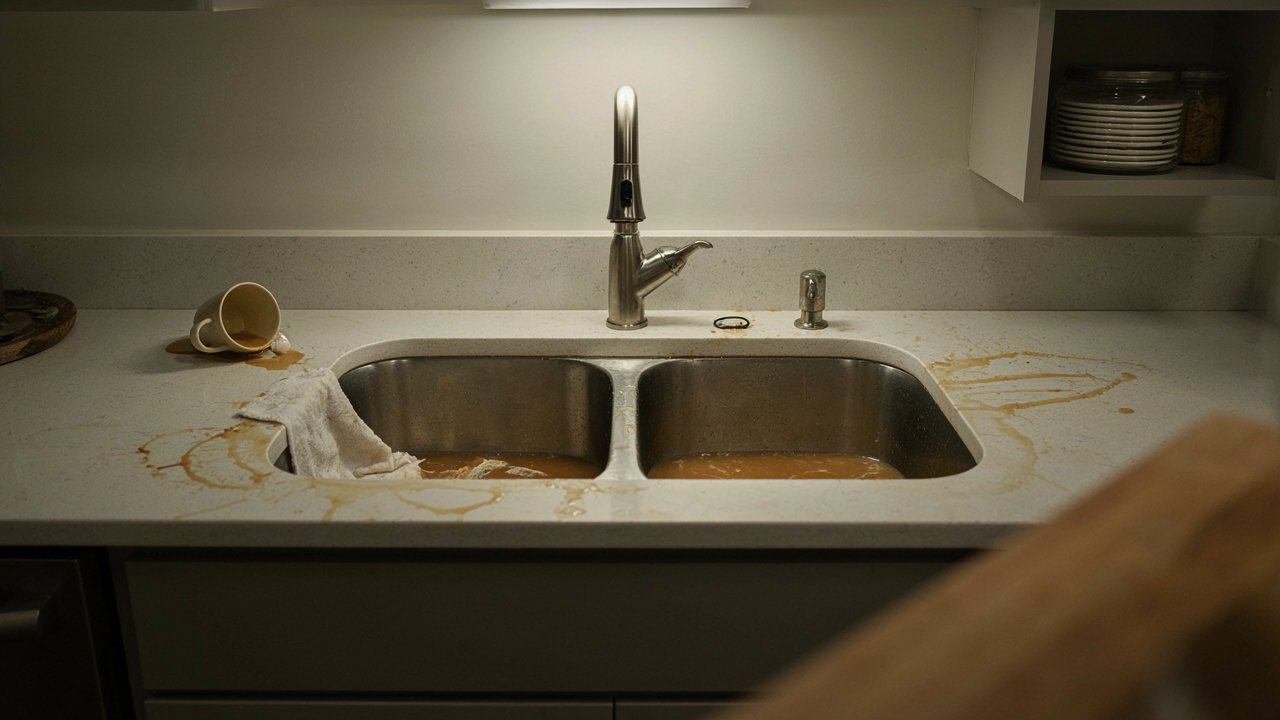
We open the tap and expect clean, safe drinking water, but the plumbing systems that supply it are anything but simple. From commercial, industrial and strata premises, these networks of pipework often link the main water supply to chemical storage tanks, irrigation systems, cooling towers and industrial processes.
When the pressure in a water supply system is reduced below atmospheric pressure, water flow can be reversed, drawing potentially hazardous materials back into the water supply. This phenomenon is known as backflow contamination.
While Sydney has one of the world’s purest water supplies, this has not happened by chance. It happens because of the rigorous control of the water through mandatory backflow prevention devices. These devices are a major issue when they malfunction, are by-passed or not even installed in the first place.
The article discusses the mechanisms of backflow contamination, presents results of recent water contamination and cross-connection investigations conducted within the Sydney area, and provides details on the specific obligations of NSW property owners in terms of water supply security and Sydney Water compliance.
What Is Backflow Contamination?
Backflow contamination happens when non-potable (dirty) liquids or water or other substances are syphoned back into the clean water supply.
Typically water will flow in one direction, through the Sydney Water mains, to your property, but sometimes the pressure can change, causing the flow to be reversed. If the reversed flow meets with a cross-connection (a point where the clean water supply connects to a source of contamination), the clean water can become contaminated.
Backflow typically occurs through two main mechanisms:
- Back-siphonage: Occurs when there is a decrease in pressure in the main water supply (due to things such as a ruptured water main in the street or firefighting operations at a nearby hydrant), causing a type of suction that draws water from the premises back into the main water supply.
- Back-pressure: The pressure within a building’s circulation system exceeds the pressure of the main water supply (typically due to high pressure within a boiler or unvented water heating systems as well as some commercial-grade water pumps). This causes contaminated water to be pushed back into the main water supply.
If there is a lack of backflow prevention devices like Reduced Pressure Zone (RPZ) valves or Double Check Valves (DCVs), such pressure fluctuations may result in a public health hazard.
How Can Backflow Contaminate a Water Supply?
To get an appreciation for the risk, think in terms of potential “inflow/infiltration” points for your property. Any point at which your potable water source could be connected to a potential contamination is a potential risk.
Suppose that a hose was left in a chemical mixing vat in a warehouse. At the same time, a water main ruptured on the street outside the building. The resulting back-siphonage would suck the chemicals up the hose and into the drinking water system.
Here is how common property setups pose a backflow contamination risk:
| Property Situation | Potential Contamination Source | Potential Mechanism | Relevant Protection |
| Commercial Car Washes | Detergents, waxes, degreasers | Back-siphonage via hoses/mixers | RPZ valve |
| Hospitals & Medical | Pathogens, sterilisation chemicals | Back-pressure from specialist equipment | RPZ valve |
| Strata & Commercial Fire Services | Stagnant water, heavy metals, bacteria | Back-pressure from fire pumps | Double check valve / Detector assembly |
| Parks & Large Estates | Fertilisers, soil bacteria, pesticides | Back-siphonage from irrigation lines | Pressure vacuum breaker (PVB) / RPZ |
| Industrial Warehouses | Heavy chemicals, industrial fluids | Back-pressure from heated vats/pumps | RPZ valve |
Real Backflow and Water Contamination Incidents: What Sydney Can Learn
It is a testimony to the vigilance of Sydney Water in enforcing the Plumbing Code of Australia and AS/NZS 3500.1 that catastrophic, city-wide backflows are rare.
Nevertheless, cross-connections and backflow risks have been a feature of several high-profile local enquiries, and there are also confirmed incidents in comparable jurisdictions, which provide ample reason for concern. Because authorities often heavily redact specific business names in contamination reports to avoid assigning liability, it is necessary to examine both local investigations and similar cases in other parts of Australia.
Here is what documented incidents teach us.
The Rouse Hill Recycled Water Cross-Connections
- What happened: People that live in the area where they have access to both normal “drinking” water and “purple pipe” water, which is recycled water, became ill and got sick from the terrible-tasting drinking water. This was discovered after audits of the homes showed that the connections for the purple pipes had been wrongly installed in the taps and valves of the home.
- Where it happened: Rouse Hill, Sydney.
- When it happened: Various audits in 2007-2009 revealed the issue, and since then it has been under strict control.
- What caused the contamination: the error of a plumber who caused a direct connection between the two water supplies.
- Where backflow fits into the story: Where in the scenario did you see where backflow could occur? In this scenario, it’s a direct connection rather than a pressure-type backflow, but it still shows the vulnerability that backflow prevention is needed to address. Connecting systems that carry non-potable and potable liquids without proper separation or backflow preventers will inevitably lead to contamination of the potable system.
- The lesson for Sydney property owners: Never assume the plumbing in a newly built or recently renovated property is correct. Any property using rainwater tanks, recycled water or bore water must be separated and fitted with appropriate backflow prevention to stop accidental contamination.
The 1998 Sydney Water Quality Enquiry (The McClellan Report)
- What happened: Sydney’s water authorities issued boil alerts after finding high levels of Cryptosporidium and Giardia in the water supply.
- Where it happened: Throughout the Sydney water system.
- When it happened: July to September 1998.
- What caused the contamination: The source of the issue was related to raw water quality and treatment plant performance at the Prospect Water Filtration Plant, which resulted in an inability to adequately treat the water during periods of heavy rainfall.
- Where backflow fits into the story: The issue of backflow and cross-connections was intensely scrutinised during the investigation led by Peter McClellan QC. The theory that groundwater and sewage had back-sifted into the drink water supply due to a loss of pressure was intensely examined. The results found little evidence that backflow was the cause of the increased contamination, but the investigation did uncover alarming deficiencies in the management of cross-connections, which led to the reforming of Sydney Water’s backflow containment procedures.
- The lesson for Sydney property owners: This incident shows the importance of maintaining network integrity. Wherever there is a local drop in pressure in the main, all properties connected to the main which do not have isolation or backflow protection are potential entry points for contamination.
The Golf Course Chemical Back-Siphonage Incident
- What happened: A groundskeeper was mixing highly toxic herbicides in a large tank with a hose submerged in the liquid and attached to the town’s water supply. Due to a drop in pressure in the town’s water supply, a syphoning effect occurred, pulling the mixed herbicide out of the tank, up the hose, and into the town’s water supply.
- Where it happened: An Australian regional golf course (frequently cited as a primary case study in Australian backflow accreditation training).
- When it happened: Early 2000s.
- What caused the contamination: Confirmed back-siphonage due to a drop in pressure plus an unprotected cross-connection (the submerged hose).
- Where backflow fits into the story: Here we have a case of confirmed backflow contamination; due to the lack of a PVB or RPZ on the hose bibb, the suction created by the drop in pressure resulted in the reverse flow of the chemical.
- The lesson for Sydney property owners: A simple garden hose can be among the most potentially hazardous cross-connections on any property. Commercial properties in Sydney that use hoses to wash down equipment, fill chemical vats, or mix pesticides are required to have high-hazard backflow devices.
Why These Incidents Matter to Sydney Property Owners
The main takeaway from these studies is that you don’t need a large plumbing disaster to cause a backflow scenario. Your everyday commercial activity can and is likely to lead to a number of potential hazards.
Consider the properties scattered across Sydney:
- Hospitality premises in Surry Hills or the CBD are highly dependent on commercial dishwashers, coffee machines, and carbonated drink dispensers. If not fitted with dual check valves, gas from the system may enter the copper pipework, dissolving toxic copper in the process.
- Industrial properties in Botany or Alexandria are full of heated vats, chemical mixers, and huge washdown bays. A drop in street pressure would see these chemicals backing up into the breakroom taps.
- Strata buildings in Chatswood or Parramatta have huge cooling towers and sprinklers for fires. But if that water sits in the lines of the sprinkler system, it can backpressure into the building’s drinking water system with heavy metals and bacteria.
Under NSW regulations, the property owner is legally responsible for ensuring that their property cannot contaminate the public water supply.
What Sydney Water Requires for Backflow Prevention
Sydney Water requires that backflow prevention be done according to the Plumbing Code of Australia as well as the AS/NZS 3500.1 standard. And if you have a commercial, industrial or multi-residential building in Sydney, here is the information you need:
- Hazard Rating Assessment: Properties are classified according to their hazard level as low, medium, and high hazard. High hazard properties include chemical works, abattoirs, and hospitals and works connected with them. Medium hazard properties are large strata complexes, commercial premises, etc.
- Boundary Protection (Containment): Sydney Water has the requirement for a backflow prevention device to be installed on the boundary of your property (or soon after the water metre) to ensure that any risk is contained within your property and does not impact the public network.
- Zone and Individual Protection: Besides the boundary, particular equipment inside the property (boiler or irrigation system) might also require individual backflow prevention devices.
- Annual Testing: Medium- and High-hazard backflow devices must be tested every 12 months.
- Accredited Testers: A standard plumber cannot carry out the test. Only a plumber with an accreditation specific to backflow testing can do it.
- Compliance Lodgement: The backflow test report must be lodged by an accredited plumber directly to Sydney Water through their portal to maintain a property’s compliance status.
Failing to test your devices can result in fines, water restriction, or disconnection by Sydney Water.
What Property Owners Should Do Now
Prevention is a breeze if you keep on top of things. If you manage a property in Sydney, why not try out this helpful checklist?
- Identify your devices: Find your water metre and look for a brass valve assembly. Check your fire service, irrigation clocks, and commercial plant rooms.
- Check the testing tag: Most backflow devices have a metal tag or sticker showing when they were last tested. If it has been more than twelve months, you are out of compliance.
- Identify potential cross-connections: Are there any hoses permanently attached to sinks, irrigation pipes lying on the ground, or commercial appliances connected to the main?
- Re-test after any works: If the use of a particular area has changed, for example, offices have been turned into medical rooms or a commercial kitchen has been installed, then the risk classification may well have changed.
- Use an accredited tester: Make sure the contractor is authorised to test and certify backflow preventers with Sydney Water.
How Backflow Testing Helps Prevent Contamination
Many people think that just because a backflow valve is installed, they are safe, but there are some internal springs and rubber seals that can corrode or break off. A backflow device can fail unnoticed. There will be no leakage or noticeable drop in pressure to indicate a problem. The only way to be sure that a device will function properly in the event of a backsiphonage is to have it tested.
While a plumber who is licensed conducts an annual examination, he/she will attach a differential pressure gauge to test taps on your device. This simulates a backflow situation, allowing the plumber to check that the internal check valves are closing completely and, in the case of an RPZ, that the relief valve is exhausting the contaminated water as it should.
At Backflow Testing Sydney, we take care of the yearly service, testing, and Sydney Water reporting of backflow prevention devices for commercial, strata, and industrial sites that are based right here in Sydney. We offer these services to ensure the mechanical performance of your device is up to standard.
Final Lessons for Sydney Property Owners
When exploring the history of potential water contamination or cross-connection control, three particular items stand out as points of interest for the property owner:
- The phenomenon that is backflow is a mechanical certainty. Variations in pressure occur on a daily basis due to breaks in lines, consumption, and firefighting within the area. And, if the property has a cross-connection, backflow will occur unless a cross-connection control device prevents it.
- You are legally responsible. Sydney Water’s boundary containment policy ensures that any contamination coming from your business into the network will incur your responsibility.
- Compliance is cheap and contamination is expensive. The cost of an annual backflow test is far cheaper than the price you could pay through damage claims and loss of reputation.
Key Takeaway
Understanding what backflow is and why it can be dangerous is the first step in protecting your property. The reports that were reviewed in Sydney and around Australia demonstrate that water pollution is always one step away, being prevented only by the proper installation of plumbing and regular mechanical tests.
Prevention is always better than cure. If you own or manage a commercial premises, strata complex or industrial site, don’t wait for Sydney Water to remind you. Take action now and check your property’s backflow devices today.
Take the next step!
Check your property for backflow devices today and if they are due for their annual test or you are unsure as to whether your property is up to standard for hazard needs, call our team to ensure your water is safe and your reports are correctly completed.
Frequently Asked Questions
What is backflow contamination?
Backflow pollution happens when water that has impurities is pulled back into the system of clean water. Backflow occurs when there is a change in water pressure that causes the normal direction of water flow to reverse in the piping system.
Has Sydney ever had water contamination incidents?
Yes. Although catastrophic failures are rare due to the regulatory control, such incidents as Rouse Hill recycled water cross connections and the investigations of water company practices during the 1998 water crisis may occur, which may see contamination entering the supply.
How does backflow contaminate drinking water?
Backflow is a potential hazard that can render potable water unsafe; back-siphonage can occur when a water main ruptures, resulting in a vacuum causing water to be pulled into the potable water supply and back-pressure occurs when a property’s system has a pressurised pump or heated system that forces water back into the water main that could possibly contain contaminants.
Who is responsible for backflow prevention in NSW?
According to the legislation (NSW) and Sydney Water’s policy, the property owner must install, maintain, and test approved backflow prevention devices at the boundary of their property to protect the public water supply.
How often does a backflow prevention device need testing?
Sydney Water requires that all testable backflow prevention devices, such as Reduced Pressure Zone and Double Check Valves, be tested by a licensed and accredited backflow plumber every 12 months.
What happens if a backflow device fails?
If a backflow device fails its annual test, it means that the internal seals or springs have failed, and the device must be cleaned, repaired or replaced immediately by an accredited plumber to ensure compliance with Sydney Water and to regain the protection a backflow device provides.