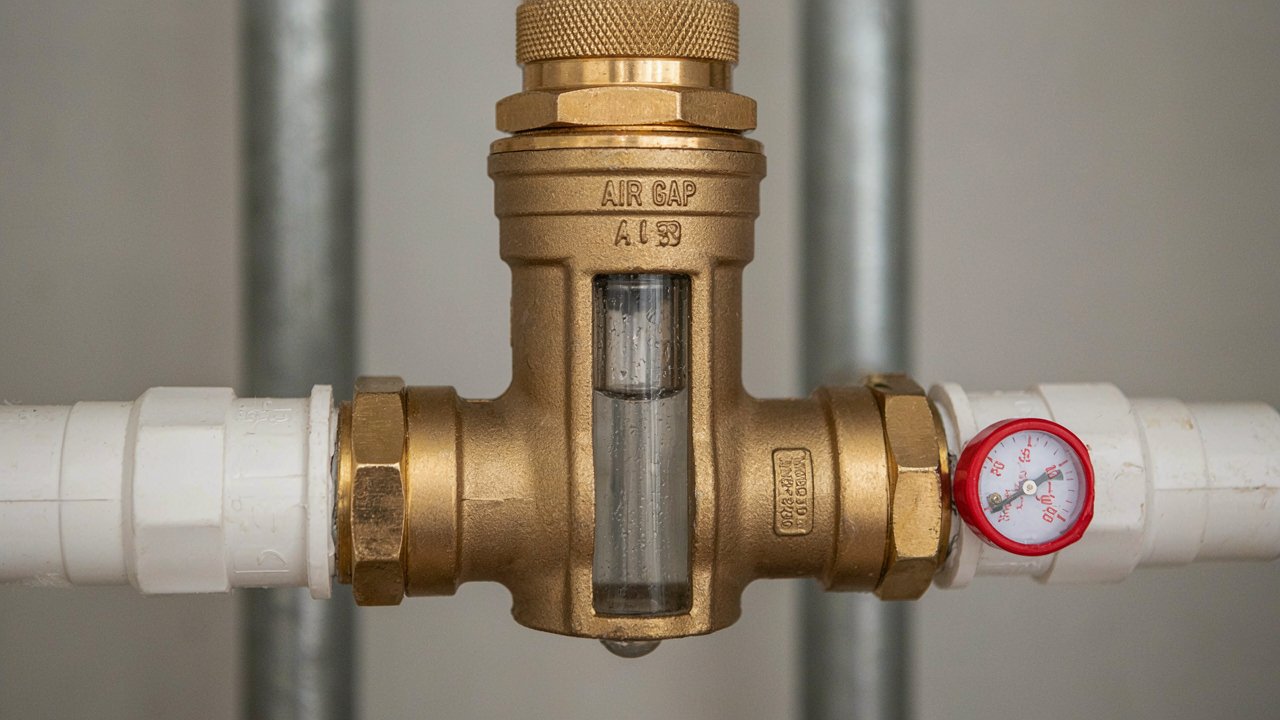
When a property owner hears the term “air gap”, it is not unusual for him to just interpret it to mean that there is just some gap left between the faucet and the sink. However, in the commercial plumbing sector, this short phrase may actually be used to denote a very specialised technique for safeguarding the public’s water system.
Our clients regularly include commercial and industrial property owners around Greater Sydney who are uncertain of their precise compliance requirements. If you are responsible for a factory in Blacktown, a building in the Sydney CBD, or a strata building in Chatswood, knowledge of an air gap backflow device and its classification by Sydney Water can assist you in complying with your plumbing compliance requirements.
What Is an Air Gap Backflow Device?
The air gap backflow prevention device refers to an absolute physical separation between the lowest point of a water delivery point outlet and the rim of the vessel used to receive the water at its flood level. This separation ensures that no water flows back into the clean water source.
This is because water cannot leap over the air gap. It therefore becomes the most appropriate way to get the best backflow prevention from a physical point of view. There is no need to consider valve failures, spring failures, or maintenance of mechanical parts. The use of an air gap for site-wide backflow protection comes with some engineering aspects.
What Is a Registered Air Gap?
This is one of the key differences between a complying plumbing system. The common air gap is seen in nearly all bathrooms and kitchens; it is the gap between the tip of your faucet and the edge of the basin.
The registered air gap, on the other hand, is an official backflow prevention system. This is an actual engineering design intended for protecting the primary source of water against a hazard site.
In order to have your site contained by Sydney Water, a registered air gap needs to be built with perfect dimensions (usually set by AS/NZS 3500.1 and AS/NZS 2845) that has been checked by an accredited backflow plumber and added into the Sydney Water backflow register. You cannot just point out an air gap in your piping and say you’re safe; it needs to be a registered air gap.
How Does an Air Gap Prevent Backflow?
An air gap backflow preventer protects from contamination through physical isolation from the plumbing system. In order to explain why this happens, we need to explore the two physical forces that make the water flow backwards.
Back-Siphonage
Back-siphonage results from a rapid decrease in the pressure of water in the main supply network. It takes place in situations where the water mains in your street break, or the fire hydrants in your area are opened. Back-siphonage causes a vacuum that tries to suck water back into the drinking water network.
If there is an air gap physically present between the piped water line and your consumption point downstream, the suction effect pulls in fresh air from the atmosphere. The polluted water is unable to rise against gravity through the gap.
Back Pressure
Back pressure occurs when the pressure of water within your premises is greater than the pressure in the main supply network. Unvented heating systems, industrial pumping systems, and water storage tanks at high elevations are some of the factors that lead to back pressure.
The air gap breaks the closed-loop connection. Any water that is pressurised and flows backwards will drain to the receiver tank or overflow to a drainage system. The water does not re-enter the clean water loop.
When Is an Air Gap Required in Sydney?
The kind of backflow prevention necessary based on existing requirements in NSW includes the Plumbing Code of Australia (NCC 2022 Amendment 2) and the water utility company requirements. The three hazard levels for property connections are low, medium, and high according to Sydney Water.
The registered air gap is considered as one that is fit for high-hazard applications. Therefore, it can be said that Sydney Water considers the use of the registered air gap to be a form of boundary containment for those properties that present a great danger to human health.
But Sydney Water generally does not require that such properties adopt an air gap as opposed to any of the other devices that pose high risks. Under the Sydney Water backflow testing standards, property owners are required to implement high-risk containment, which can be done through:
- A registered air gap
- A registered break tank (a tank system incorporating a compliant air gap)
- A Reduced Pressure Zone (RPZ) mechanical device
The choice for what technique to employ completely rests on the plumbing arrangement of the property in question, as well as the physical space and water pressure requirements.
Containment vs. Zone vs. Individual Protection
It is also important to note where the gap is placed.
- Containment protection is installed at the property line to safeguard the community water main.
- Zone protection isolates the high-risk area within the structure (chemical mixing room).
- Individual protection isolates the particular fixture or appliance.
Where a registered air gap is useful in providing boundary protection, the normal air gap is often applied within the building to provide protection to appliances.
Comparison of Backflow Protection Methods
The table below outlines how an air gap compares to other common backflow prevention methods in NSW.
| Protection Method | Basic Principle | Typical Hazard/Application | Mechanical? | Annual Compliance |
| Registered Air Gap | Physical separation | High-hazard boundary containment | No | Annual inspection & reporting to Sydney Water |
| Registered Break Tank | Tank plus approved air gap | High-hazard applications | No | Annual inspection & reporting to Sydney Water |
| RPZ Valve | Two check valves + relief valve | High-hazard applications | Yes | Annual testing & reporting to Sydney Water |
| Testable DCV | Two independent check valves | Medium-hazard applications | Yes | Annual testing & reporting to Sydney Water |
| PVB (Pressure Vacuum Breaker) | Vacuum protection valve | Specific back-siphonage uses only | Yes | Annual testing & reporting to Sydney Water |
Air Gap vs RPZ: Understanding the Difference
Many property owners seek clarifications from us on the distinction between a registered air gap and a Reduced Pressure Zone (RPZ) apparatus. Both are acceptable as high-hazard-containing apparatuses in Sydney, but both perform very differently.
- Operating Principle: The RPZ is a mechanical device consisting of a valve assembly. This device operates using internal springs, check valves, and differential pressure relief ports that discharge water when there is any indication of reverse flow. The air gap works using physical spacing.
- Pressure Implications: This is the most significant factor when choosing between engineers and plumbers. As water passes through the RPZ, there will be some loss of pressure; however, it still retains its pressurised and closed system state. When water passes through the air gap, it falls into a tank or vessel under atmospheric pressure. The water then needs to be manually pumped to become pressurised again.
- Installation Space: The RPZ is a small-sized mechanical valve that may comfortably install close to the property line or even by the water metre. The registered air gap is installed through a receiving vessel or registered break tank that occupies much commercial floor space.
While the air gap offers complete physical safety, the necessary engineering involved in re-pressurising the water flow means that it is not always suitable for most standard commercial structures. In such cases, an RPZ becomes the best solution.
Air Gap vs DCV and PVB
Although an air gap is a hazardous solution, DCV and PVBs are mechanical systems used for low hazards. A DCV is used in medium-hazard situations. It consists of two check valves but it does not have an emergency dump port like an RPZ. A PVB is only used under certain conditions where it prevents back-siphonage but cannot prevent back pressure.
For those who are confused about the type of mechanical valve needed at their sites rather than a physical air gap, check out our complete guide: RPZ, DCV or PVB? Which Backflow Device Do You Really Need?.
Where Are Air Gaps Commonly Used?
Air gap backflow prevention systems are used in a diverse range of industries in Sydney. They can be found in the following environments:
- Break Tanks With Registration: Large storage tanks for water with the municipal supply line coming out above the maximum level that can ever be reached by the water inside the tank.
- Cooling Towers: In commercial high-rises, the HVAC system uses an air gap in order to prevent the chemical-filled water from entering the main supply line.
- Commercial Food Preparation: Dishwashers, food preparation sinks and ice machines are often equipped with physical air gaps, separating them from drainage/sewer pipes.
- Industrial Tanks: In factories using chemicals or dye, clean water is dropped into the mixing tanks from above, making sure that no chemical comes into contact with the clean water supply pipe.
It is important to state that just by virtue of having an air gap above the tank, this does not make the property meet the requirements. There are strict standards that apply concerning the configuration, the diameter of the overflow pipe, and the surrounding environment.
Understanding WaterMark Requirements
Plumbing items associated with the domestic water supply in Australia should be WaterMark certified to prove that the item is suitable for its application and is safe to use.
Since the air gap is not a manufactured product but a physical space, it is impossible to purchase a “watermarked air gap” the way one purchases a valve RPZ. Nevertheless, any manufactured break tank, tundish, or commercial item using the air gap backflow prevention feature should be WaterMark certified according to the Australian standards (AS/NZS 2845, for example). The on-site installation of the air gap should conform to the latest Plumbing Code of Australia.
Do Registered Air Gaps Need Annual Testing in Sydney?
This is one of those points that usually causes confusion. Since the air gap is not a mechanical valve, it is normally assumed that it does not need to comply annually. This assumption is false.
The registered air gap can never be “tested” using the differential pressure gauge because, unlike the RPZ valve. However, under the requirement of Sydney Water, the registered air gap or break tank that is used as the boundary containment should be checked annually by an accredited backflow plumber.
The plumber must ensure that there is no change in the physical size of the gap, that there are no obstructions in the overflow system, and that there are no unauthorised connections that connect to create a physical gap. After verification, the report regarding compliance needs to be submitted to Sydney Water before the deadline.
What Should Sydney Property Owners Do If They Are Unsure?
Receiving a compliance notice or becoming responsible for the management of a commercial building can make it challenging to know what to do. To make it easier for you, we recommend taking this simple step:
- Read your Sydney Water notice carefully: If it is in letter form, it will usually indicate if your property has a mechanical device that has been registered, a break tank or an air gap.
- Determine the current setup: Find your water metre and find out if there are any mechanical devices (RPZ/DCV) or large storage tanks close to the boundary of the property.
- Assess your risk rating: In the event that the use of the property has changed (e.g., a warehouse being turned into a chemical storage place), have the current set up checked by a qualified plumber.
- Verify your registration: Verify that your backflow prevention device is registered with the Sydney Water system.
- Establish your inspection dates: Confirm the precise date you need to have your device tested or inspected annually.
- Employ an approved backflow plumber: Only a qualified plumber with backflow certification can inspect and test your backflow prevention device or register compliance reports.
- Maintain copies of your compliance reports: Always keep copies of any lodgement reports.
It takes professional skills to go about backflow testing in Sydney. Make sure the team you engage knows how unique the regulations of physical openings and mechanical valves are.
Expert Help for Your Commercial Plumbing Compliance
If you’re not sure whether the backflow prevention system that has been installed at your Sydney premises is a registered air gap, RPZ, DCV, or other installation, our crew can assist you in establishing the appropriate tests and standards. Backflow Testing Sydney takes care of everything related to your site, including site hazard assessment, annual testing, and direct lodgement with Sydney Water.
Contact us now to make sure you’re compliant with regulations.
Frequently Asked Questions
What Is a Registered Air Gap in Sydney?
A registered air gap is an officially recognised form of backflow prevention that is documented by Sydney Water. The air gap is achieved through engineering the distance between the water main and the receiving vessel for the protection of public drinking water.
When Does Sydney Water Require a Registered Air Gap?
An approved air gap is used by Sydney Water for backflow prevention from properties which have high hazards. This can depend on the plumbing layout of the building, pressure needed, space available, and application of the Plumbing Code of Australia.
Does a Registered Air Gap Need Annual Testing?
Although there is no mechanical valve which can be checked using the pressure gauge, the accredited air gap that is installed for preventing backflow needs to undergo an annual inspection to ensure that the physical dimensions comply with the regulation.
Is an Air Gap Better Than an RPZ Backflow Device?
The air gap offers complete separation in terms of physical isolation, whereas the RPZ depends on mechanical valves. The air gap is highly efficient but reduces the pressure of the water supply. The RPZ valve is mostly used when the water downstream needs to stay under pressure.
Where Are Air Gaps Commonly Used in Plumbing Systems?
Air gaps are typically employed in association with registered break tanks, commercial cooling towers, chemical mixing tanks, and commercial food equipment. This type of device is suited for installations where physical separation from possible contamination sources can be structurally justified.